Clean lines define this season’s furniture
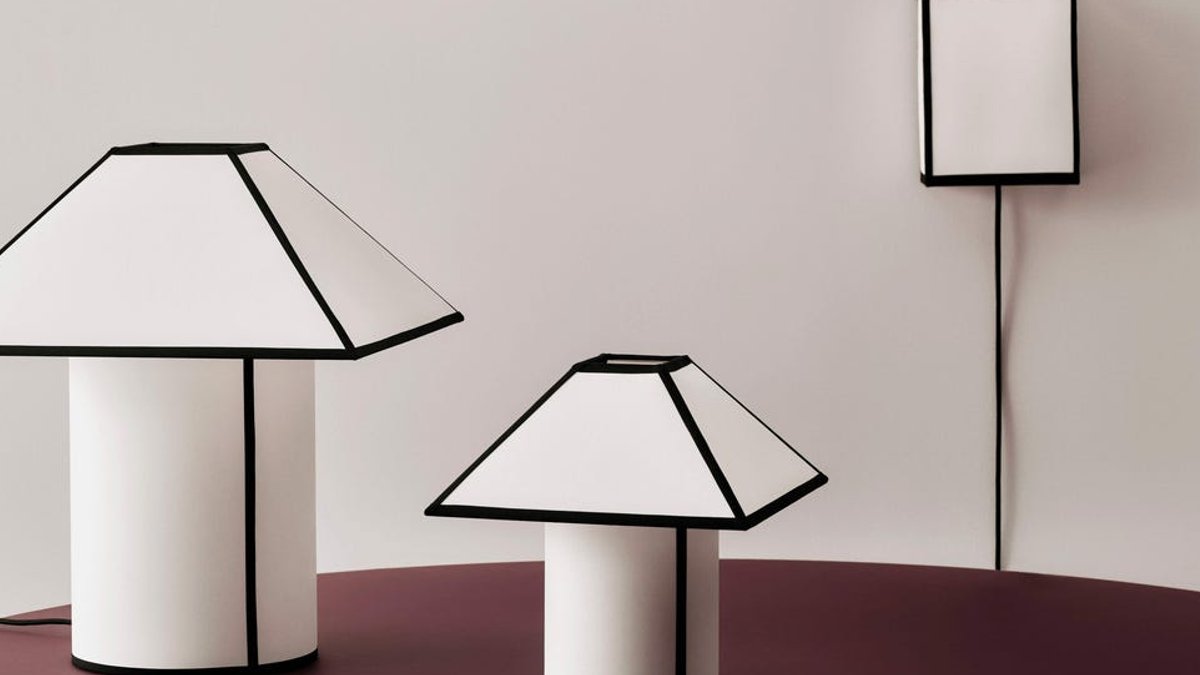
Furniture and homeware are gaining clearer definition this season. A rising trend in interiors focuses on crisp outlines, turning everyday pieces into deliberate designs. Piping, contrasting trims, and bold borders add structure and a playful touch to items from sofas to teacups.
The return of the tailored edge
The trend draws from classic upholstery techniques, where fabric meets frame in a clean line. These outlines create visual anchors, making simple forms feel more intentional. Designers use them to emphasize silhouettes, introduce color, or add texture without overwhelming a piece.
Consider the Ava Pyramid table lamp by Ana Kraš for Hay. Its wireframe design, inspired by a makeshift lamp Kraš built in her new apartment, resembles a loose sketch. The thin metal outline gives it a lightness heavier materials couldn’t achieve. Priced at £199, it offers an affordable way to try the style.
The Lazy Bean chair from Nilufar Edition takes the concept further. Its wooden frame features thick, luxurious fabric with subtle piping that follows the curves. Mahogany legs ground the design, but the piping guides the eye along the form. Prices start at £9,750.
Not every outline is understated. The Formal Twin armchair by Sancal borrows its shape from vintage cinema seats, but neon orange piping transforms it into a modern statement. Designer Júlia Esqué’s color choice makes the silhouette stand out, showing that boldness can work just as well as restraint.
Related: O’DonnellBrown bridges conservation and community design
When less becomes more
The trend extends beyond furniture. Bedding, mirrors, and even parasols now feature similar details. Rise & Fall’s Soft & Smooth duvet set in Buttermilk Stripe uses thin, parallel lines to create a border effect. At £110, it provides an easy way to bring the look into a bedroom.
Polish studio Please Touch took a different approach with its In Between mirror. Here, the outline serves a structural purpose. The frame combines steel with delicate lace, highlighting traditional piping techniques. The result feels both industrial and handmade, available for £363.
Annebet Philips’ Carte Blanche tea set for Serax pushes the idea into whimsical territory. Each white porcelain piece is framed by thin, hand-drawn lines, as if traced with a marker. Philips first cut the designs from cardboard, giving the set a playful quality. A teacup costs around £19.
Outdoor pieces follow the same principle. Soho Home’s Square Parasol uses contrast piping along its scalloped edge to make a functional item more striking. Made from weather-resistant aluminum, it withstands sun and rain for £5,995.
Some designers reverse the approach. Faye Toogood’s Crease sofa for Meritalia starts with the upholstery rather than the frame. The fabric’s folds and seams become the focus, resembling a freshly ironed shirt. It comes in two- and three-seat versions, starting at £8,375.
Related: Retro Revival Uncovers Best of 1970s Brick Home
The appeal of crisp outlines lies in their adaptability. They can make neutral pieces feel dynamic or give bold designs a sense of order. For those hesitant to make major changes, outlines offer a low-commitment way to experiment with color and texture.
This trend also reflects a shift toward craftsmanship. In an era of mass-produced furniture, a well-executed outline signals attention to detail. It’s a small touch, but one that makes a space feel more deliberate.
Not everyone will prefer this style. The best examples balance precision with restraint. Too much piping or contrast can become fussy. Pieces like the Lazy Bean chair or In Between mirror use outlines to highlight, not overpower.
For now, crisp outlines are having their moment. Whether they endure or fade remains uncertain. But for those wanting to refresh a space without starting over, they provide a simple starting point.


