Maui Off‑Grid Home Embraces Local Culture and Climate
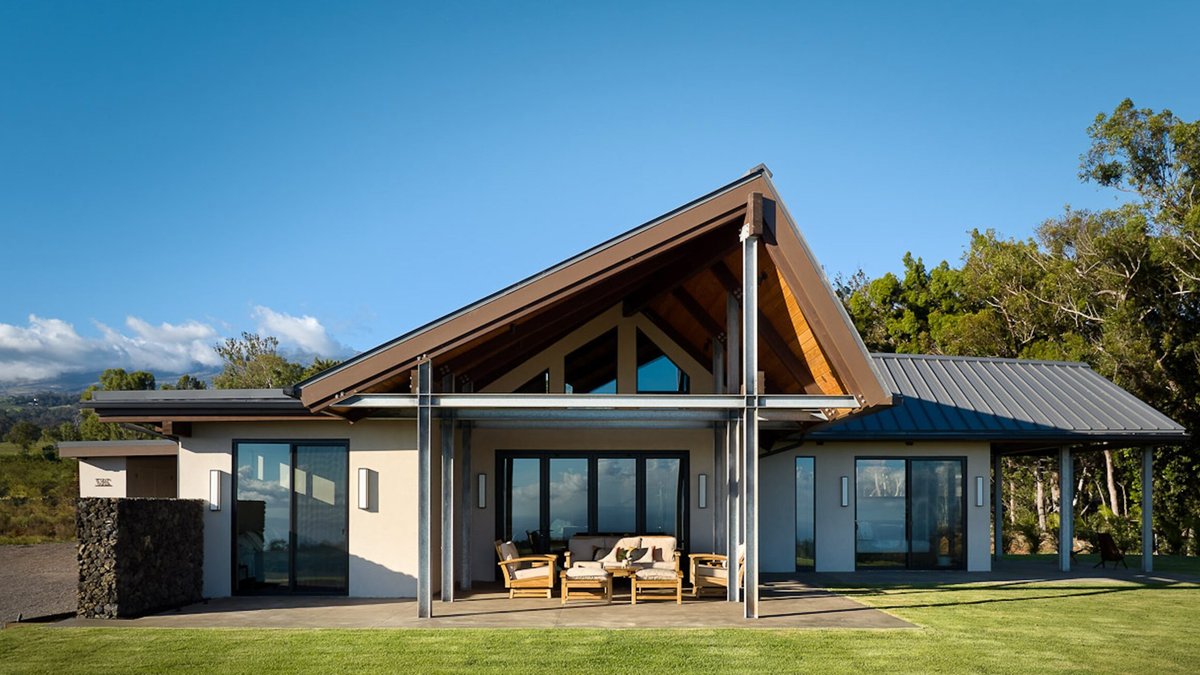
Kupono Hale, a single‑family home on Maui’s Haleakalā slopes, showcases how passive design, solar power and locally sourced, upcycled materials can be combined to meet a warming climate.
It serves as a model for resilient island architecture.
Design rooted in climate data
David Sellers, who was part of a group developing a climate action plan for Maui, reviewed a report that noted a five‑inch rise in sea level at Kahului Harbor since 1950 and a shift in prevailing winds from northeast to due east. “This is climate change that I can see in my lifetime,” Sellers said, recalling his Texas upbringing and studies at Delft University of Technology. Those observations guided the creation of a residence that can operate without connection to the island’s grid while still providing enough electricity for the home and an electric vehicle.
The house appears at first glance to be a typical Hawai‘i Contemporary structure, using simple volumes capped with gabled roofs. In reality, the design integrates passive heating and cooling strategies with renewable energy systems, turning the building into a living laboratory for climate‑responsive architecture.
Related: Designers Gather at NeoCon in Chicago
Innovative materials and construction
Behind a stucco finish, the walls consist of custom insulated composite concrete forms known as “Surf Block.” The blocks blend cement with expanded polystyrene foam rescued from local surfboard manufacturers. Each block measures five feet in length and functions as both the mold for poured‑in‑place concrete and the wall’s insulation, delivering roughly double the R‑value of a conventional wall assembly while keeping waste out of landfills.
The roof’s parabolic shape emerged from a desire to frame the site’s dramatic view while staying true to passive design tenets. Architects rotated the house slightly on its axis but kept roof ridgelines aligned with the sun’s trajectory, producing a compound curve that aids both heating and cooling. Glulam beams and ceilings made from Cook pine—trees introduced decades ago for timber plantations—form the roof structure. Sellers notes that many of these trees have become safety hazards, prompting him to harvest timber from his own property.
Covered lanais add roughly the same square footage as the interior, extending living space outdoors and reinforcing Hawai‘i’s vernacular of open, breezy areas. High ceilings, generous windows and the locally milled pine blur the line between inside and out, allowing cross‑ventilation to reduce reliance on mechanical cooling.
The home’s modest footprint—998 square feet for two bedrooms—helps keep energy demand low. Despite the compact size, the interior feels spacious thanks to the high ceilings and multiple lanais. “Outdoor lanai are a big part of our vernacular,” Sellers explains. “When you see a building, it should tell you a story. It should tell you about time, it should tell you about place, and it should tell you about climate.”
Related: Simple Upgrade Shields Truck Bed From Elements
In a broader sense, Kupono Hale illustrates how architecture can respond to immediate climate signals while honoring local cultural practices. By using reclaimed surfboard foam and salvaged timber, the project reduces material waste and supports a circular economy that is increasingly relevant for island communities facing limited resources.
Energy performance and future implications
The residence relies on a solar array sized to meet its electricity needs and to charge an electric vehicle. According to the developers, the combination of high‑efficiency insulation, strategic orientation and natural ventilation enables the house to operate off‑grid throughout the year. The design demonstrates that even in a region with mild temperatures, thoughtful building practices can eliminate dependence on fossil‑fuel‑based power.
While Kupono Hale is a single example, its methods could be replicated across the islands, where rising sea levels and shifting wind patterns pose growing challenges. The use of locally sourced, upcycled components may inspire other builders to explore similar low‑impact solutions, potentially reshaping construction standards in Hawai‘i and beyond.


