Seven plants for festive pot displays
There is a special joy in stepping out on a cold December morning and finding a flower waiting for you. By Christmas, most gardens are dormant: borders are cut back, and summer pots are long gone. That is why a blooming container by the front door feels so special.
The secret is planting now, while the soil still holds autumn’s warmth, allowing roots to settle before frost arrives. Seven plants that reliably flower in pots by the festive season have been gathered here.
7 container plants to brighten your Christmas
If you are starting from scratch, a frost-proof glazed pot and a bag of peat-free multipurpose compost are all you need. Choose a spot you pass daily, like a doorstep or kitchen windowsill, as winter flowers are best enjoyed up close. Many of these plants are also scented, so they are ideal near the house.
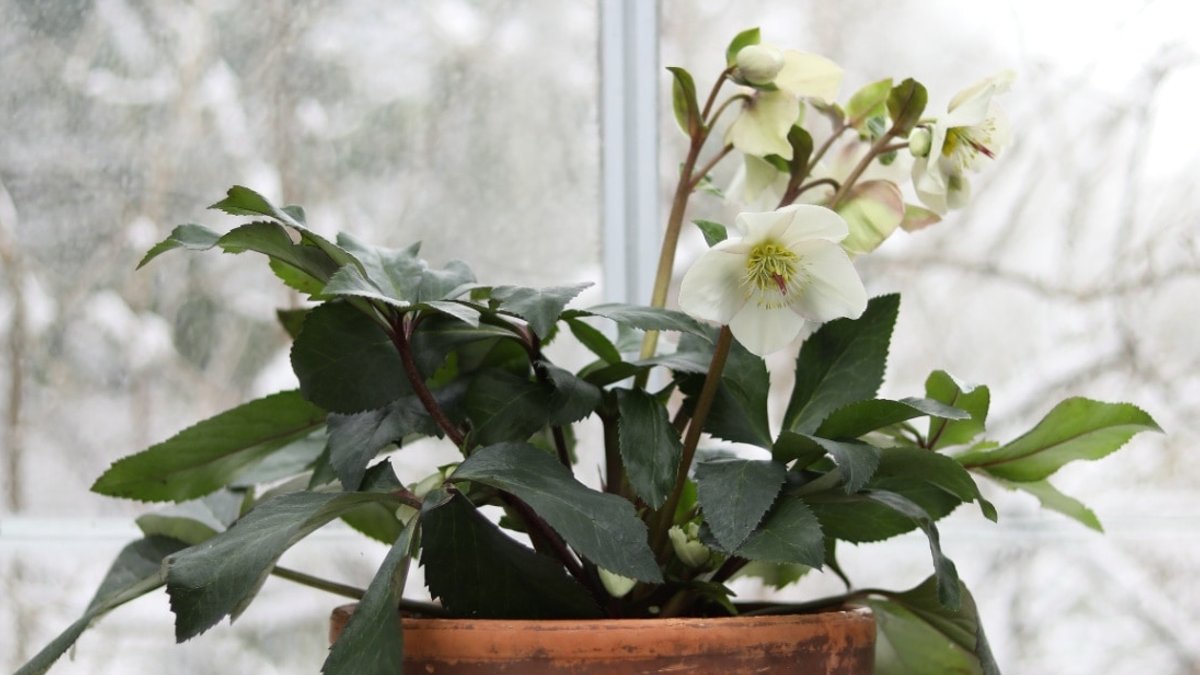
Hellebores are a classic Christmas choice. The Christmas rose, Helleborus niger, has bloomed in cottage gardens at midwinter for centuries. Its pure white, saucer-shaped flowers with golden stamens look almost paper-cut. Hellebores are long-lived; with care, they will flower every Christmas for years. Use a deep container, as they dislike root disturbance. Fill it with loam-based compost, place it in light shade, and water on dry days, even in winter. Snip off old leaves as buds emerge to showcase the flowers.
A camellia named for Christmas truly earns its title. While spring camellias wait until March, Camellia sasanqua flowers from late autumn into winter. ‘Yuletide’ produces single, scarlet blooms with bright yellow stamens, glowing against dark, glossy leaves. Many sasanquas have a light, sweet scent, so plant one where you will catch it on your way in.
Sasanqua flowers are smaller and open in succession, so a cold night rarely spoils the whole show. The plant is slow-growing and compact, making it ideal for small terraces or balconies. Once flowers fade, the foliage remains a handsome backdrop year-round.
Camellias need ericaceous compost. Give them a sheltered, sunny spot, as sasanquas like more warmth than spring varieties. Water with rainwater where possible, as hard tap water can yellow leaves over time.
Winter heathers are a humble but abundant choice. Erica carnea and Erica × darleyensis are hardy and happy in ordinary compost, blooming through the coldest weeks. ‘December Red’ opens rosy-pink flowers as festive lights go up, while ‘Springwood White’ offers a crisp, snowy alternative.
Heathers are one of the few plants that attract wildlife in winter. On mild days, early bumblebees visit the flowers, and a pot by the back door can become a refuelling station. They pair beautifully with other plants on this list, like hellebores or violas, creating a display of colour in a window box. Inexpensive and versatile, they are a great way to fill a large container without breaking the bank.
Plant three around the rim of a larger container to soften its edges. After flowering, trim lightly with shears to keep them bushy.
Read Also: Istanbul Corner Cafe Transforms Into Bar by Night
Quick colour and fragrant surprises
Miniature cyclamen offer the quickest route to Christmas colour. Their swept-back petals come in crimson, candy pink, white, and bicolours, with silver-veined leaves. Even out of flower, the foliage is handsome enough to earn its place.
For a truly hardy alternative, Cyclamen coum is worth seeking out. Its dainty magenta flowers appear from January, thriving in dry, shady spots under trees.
You can often smell sweet box before you see it. Its tiny white flowers are easy to overlook among the glossy leaves, but their honey perfume can stop you in your tracks. The fragrance carries far for such a modest plant, earning its name, Christmas box.
Shade-tolerant, compact, and unfussy, it is ideal for gloomy doorways or north-facing spots. It rarely needs pruning, shrugs off frost, and stays evergreen, so the pot never looks empty. Small black berries often follow the flowers, adding interest into spring.
Winter pansies and violas are cheerful, inexpensive, and tougher than they look. While they sulk in hard frost, they bounce back with every mild spell, flowering from October to April. Their open faces come in deep purple, sunny yellow, and soft apricot, brightening short days.
For pots, violas are preferable. Their smaller flowers are more weather-resistant and recover faster after rain. Trailing varieties look charming spilling over a basket or window box. Plant them generously for a statement display.
‘Soft Caress’ is a compact, spineless mahonia with fine, feathery foliage resembling bamboo. From autumn into winter, it sends up upright spires of butter-yellow flowers that glow against dark leaves.
Sarcococca is a less common option for winter pots. The cultivar ‘Purple Stem’ from Thompson & Morgan features slender leaves and pink-tinged flowers on dark stalks. It grows best in loam-based compost and should be placed right beside the door. This ensures you brush past the plant on your way in and catch its fragrance.
Keep this evergreen watered during dry spells. Containers can dry out quickly, even in winter. The plant requires little pruning; simply remove any tired leaves in the spring.


