AI Firms Boost Singapore Office Rents While Retail Struggles
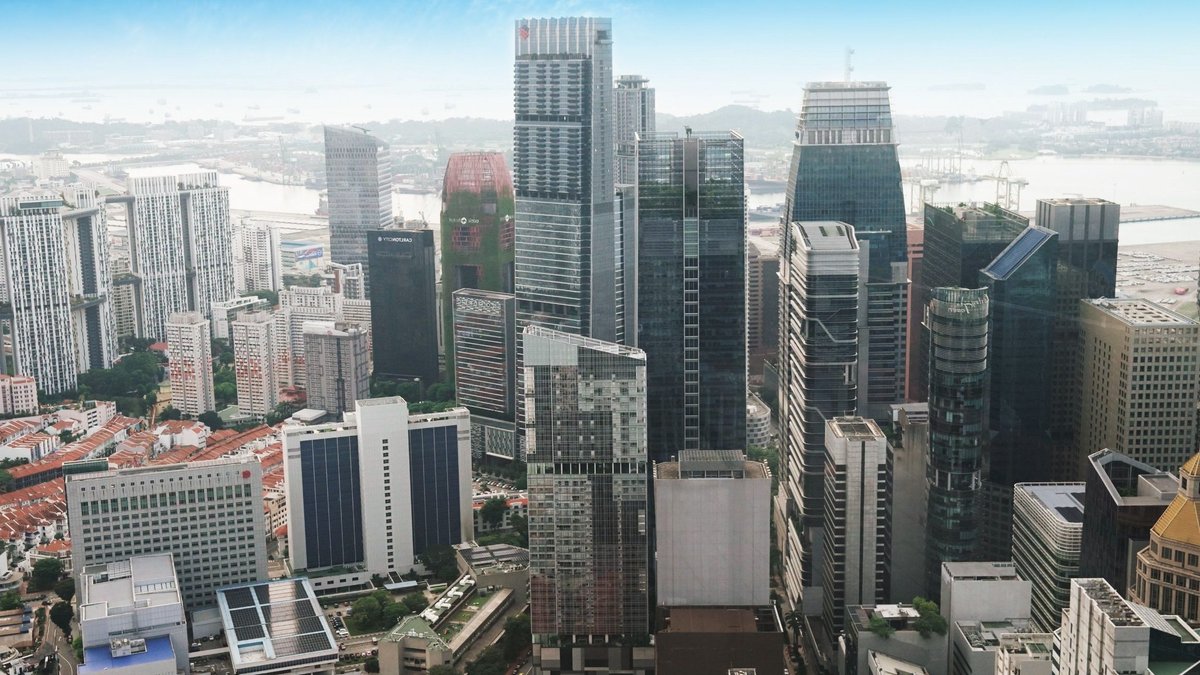
Singapore’s property market is showing a distinct split, with office rents climbing while the retail sector struggles against a mix of costs and competition. According to the 3Q2026 real estate statistics released by the Urban Redevelopment Authority on Oct 23, office rents in the Central Region rose 0.8% quarter-on-quarter, matching the growth seen in the previous quarter. Retail rents followed a similar pattern, recording a 0.7% increase in 3Q2026 after a 0.6% rise in 2Q2026.
Tech Firms Drive Office Demand
Market analysts are far more bullish on the office sector than on retail. While the retail market grapples with higher operational costs and weaker consumer spending, office landlords benefit from resilient demand. This demand is largely coming from international technology and artificial intelligence firms setting up bases in Singapore. These companies range from high-value AI firms occupying core CBD Grade A office buildings to smaller startups choosing flexible spaces in fringe areas.
June Chua, Head of Singapore Leasing at Newmark, noted that technology and AI firms are shifting from serviced offices to their own premises. This shift signals a deeper commitment to the city-state. OpenAI reportedly operates from a flexible space in CapitaSpring and is in talks for about 120,000 square feet at Shaw Tower. Anthropic is located at The Executive Centre in Ocean Financial Centre, and Manus AI is at Industrious in Keppel South Central. Tricia Song of CBRE observed that these firms are driving demand for larger spaces, often moving from short-term leases to long-term commitments.
Unlike retail, which faces headwinds from e-commerce and manpower shortages, the office market is supported by a scarcity of new supply. The closure of 79 Anson Road and HarbourFront Centre, set for redevelopment, removed approximately 775,000 square feet of office stock. This reduction is significant when compared to the limited pipeline of new space expected in the coming years. Only 1.011 million square feet of new office space is planned for 2027, a figure that is relatively low compared to the 3.43 million square feet expected in 2028. This imbalance creates a landlord-favourable environment.
Read Also: HDB Resale Prices Fall Despite Record Sales Surge
City-fringe locations are also seeing strong growth, with rents rising 2.5% quarter-on-quarter. This outperformance is often attributed to small- and medium-sized enterprises and startups seeking more affordable options. However, the core Central Area remains the preferred choice for many high-profile firms. Even though Central Area rents underperformed city-fringe locations in the latest quarter, demand remains high for the limited selection of high-quality Grade A offices in the heart of the city.
This concentration of demand in prime areas, combined with a shrinking supply of office space, creates a unique pressure point for the market. While smaller firms and startups drive growth on the fringes, the limited availability of contiguous premium space in the core CBD keeps the competition fierce for the most sought-after buildings. The upcoming One Comcentre, a redevelopment of the former Singtel ComCentre, and The Clifford, a redevelopment of the former Clifford Centre, are set to inject new office space by 2028, but the immediate outlook remains tight.
One Comcentre will consist of two 20-story Grade A office towers plus six levels of amenities, including food courts, medical suites, fitness and wellness centers, and an auditorium with 400 seats.
Retail Faces Structural Challenges
However, growth is uneven. Tier-one shopping malls with high footfall continue to attract interest from fashion and F&B brands. CBRE projects rental growth of 1% to 2% for the year. Factors supporting this include tourism spending and a busy calendar of concerts and events. Yet, the broader market must address manpower shortages and the lingering effects of inflation on consumer confidence.
Read Also: Singapore Condo Owner Weighs Holding or Selling
Office vacancy rates in the core CBD Grade A segment dropped to 2.6% in 3Q2026 from 3.3% in the prior quarter. Retail vacancies in the OCR decreased from 5.2% to 4.7% in the last quarter, which CBRE’s Song credits to sustained consumer demand from suburban estates and regular visitor traffic. Retail property prices across Singapore have shown strong growth in recent years, aligning with the broader market recovery post-Covid-19.
At Tampines Mall, retailers like Sephora, Dior Beauty and Paris Baguette have moved into former anchor units. This highlights ongoing demand for well-located properties with strong demographics and footfall, according to Wong of C&W. Vacancy rates remained unchanged at 6.5%, reflecting the proportion of retail space that exited the market.
Orchard Road is still the bellwether of the retail market. Prime retail space in Orchard Road is projected to perform well, driven by tourism and buzzy foreign retail openings. The prime shopping belt remains the first choice for international brands making their Singapore debut, says Wong of C&W. London streetwear brand Palace recently opened at Scotts Square, and Korean footwear label Rockfish at ION Orchard. Thai fashion label Gentlewoman and Japanese doughnut chain I’m Doughnut are set to follow in the coming months.
“With only 4% of upcoming supply expected in Orchard Road, supply pressures within Singapore’s prime shopping belt are expected to remain limited, supporting rental growth in prime retail assets,” says Wong. However, retailers should remain cognisant of nascent trends, such as the conversion of some retail spaces into other uses. Taste Orchard is becoming JustCo Place, a co-working space, and Orchard Central has also announced an office conversion. These are some of the most impactful changes along Orchard Road in recent years.
Related Stories
 Contractor Vetting Desk
AI Firms Boost Singapore Office Rents While Retail Struggles
 Contractor Vetting Desk
HDB Resale Prices Fall Despite Record Sales Surge
 Contractor Vetting Desk
Bathroom Space Solutions: Rethink Under-Sink Cabinet Designs
 Contractor Vetting Desk