Ligne Roset Balances Heritage and New Designs
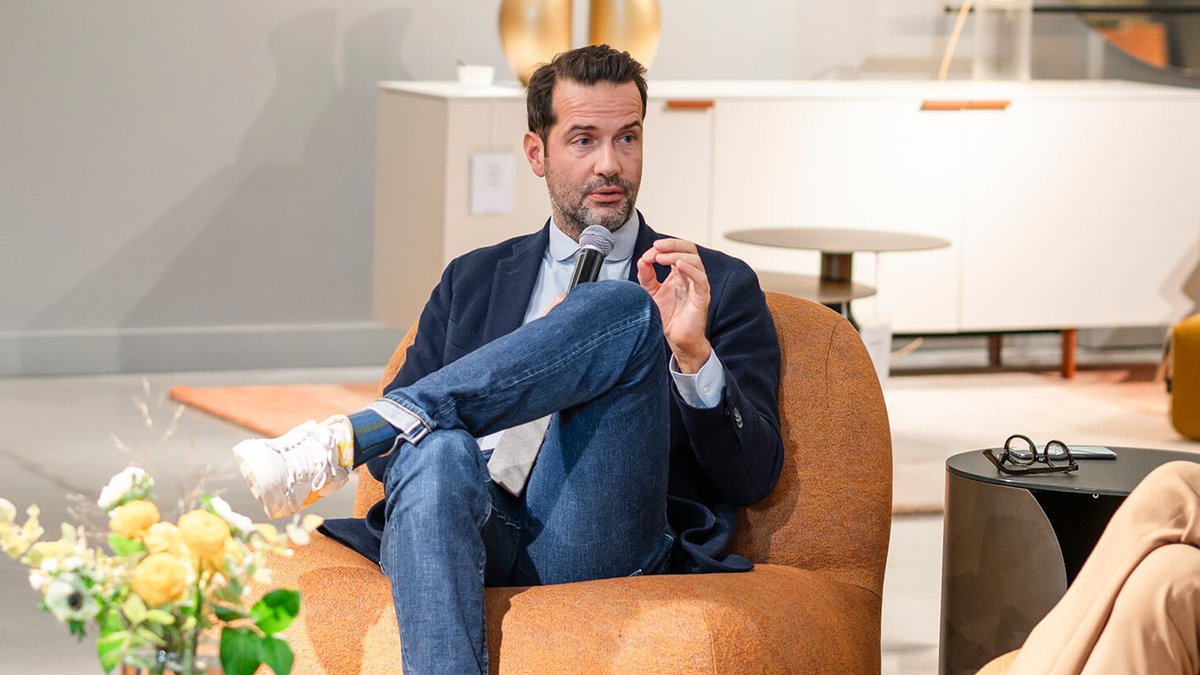
Ligne Roset co-CEO Antoine Roset represents the fifth generation of the family-owned business, which has built an enviable catalogue of instantly recognizable furniture. The brand is increasingly focused on strengthening its identity, with collaborations that step beyond the world of interiors, such as a limited-edition performance bike with Origine Cycles and a tailoring-inspired makeover of the Togo chair with fashion house BOSS.
While exploring new directions, Ligne Roset’s archive of iconic pieces remains its core business. The brand is lucky to have a roster of tried-and-true designs to pull from, driving a growing wave of reissues from names like Pierre Paulin and Philippe Morel-Lab. This approach is driven by market demand, particularly in Europe, where there is still a huge demand for the reedition of products from the 50s, 70s, and 80s.
Reissues and New Collections
In 2026, Ligne Roset re-introduced the Marsala lounge chair and footstool by Michel Ducaroy and the ML 80 storage system by Philippe Morel-Lab, both from the 70s. The brand also introduced the new Anja modular sofa, which is more dedicated to big living rooms and features a classic round shape with rich materials. These reissues and new collections reflect the brand’s effort to balance commercial appeal with the need to invest in new designs and push the envelope.
The challenge for Ligne Roset is to find a balance between sticking with what works and taking risks on new products. Antoine Roset notes that the brand’s archive is a significant asset, with designs that remain modern and relevant today. However, the brand also needs to continue to be creative and invest in new products, even if it’s a risk. The Ploum sofa, launched in 2010, is an example of a successful new product that was introduced during a difficult economic period.
Ligne Roset’s approach to design is also influenced by its growing involvement in hospitality design. The brand presented its latest collection at the Palais de Tokyo through an imaginary hotel and speakeasy, highlighting its contract capabilities. This approach reflects the brand’s effort to bring a hotel-like spirit to residential interiors, with a focus on comfort, relaxation, and durability.
Related Post: London home extension blends modern design with historic setting
Ligne Roset’s collaborations with companies like BOSS and Origine Cycles are driving its design approach. These partnerships allow the brand to reach new customers and explore new ideas, while maintaining its focus on quality, comfort, and elegance. Antoine Roset notes that the brand is not trying to imitate the style of the 70s, but rather to create products that are modern, durable, and relevant to today’s market.
One of the key challenges for Ligne Roset is to balance its creative vision with the commercial realities of the market. The brand needs to produce products that are both desirable and profitable, while also maintaining its commitment to quality and durability. This requires a deep understanding of the market and its trends, as well as a willingness to take risks and invest in new designs and materials.
In terms of material innovation, Ligne Roset has recently updated the Togo’s foam to incorporate recycled material through a mass-balance system. This change reduces the brand’s environmental impact, with a focus on carbon neutrality and sustainability.
Next year, Ligne Roset will celebrate the 100-year anniversary of Pierre Paulin, with a range of new products and collaborations. Antoine Roset notes that the brand’s goal is to work with designers who share its vision and values, and to create products that are both beautiful and sustainable.
Ligne Roset’s focus on durability and sustainability is reflected in its approach to product design. This approach reduces waste and minimizes the brand’s environmental impact, while also providing customers with products that are both desirable and durable.


