Canada’s furniture brands struggle for global support
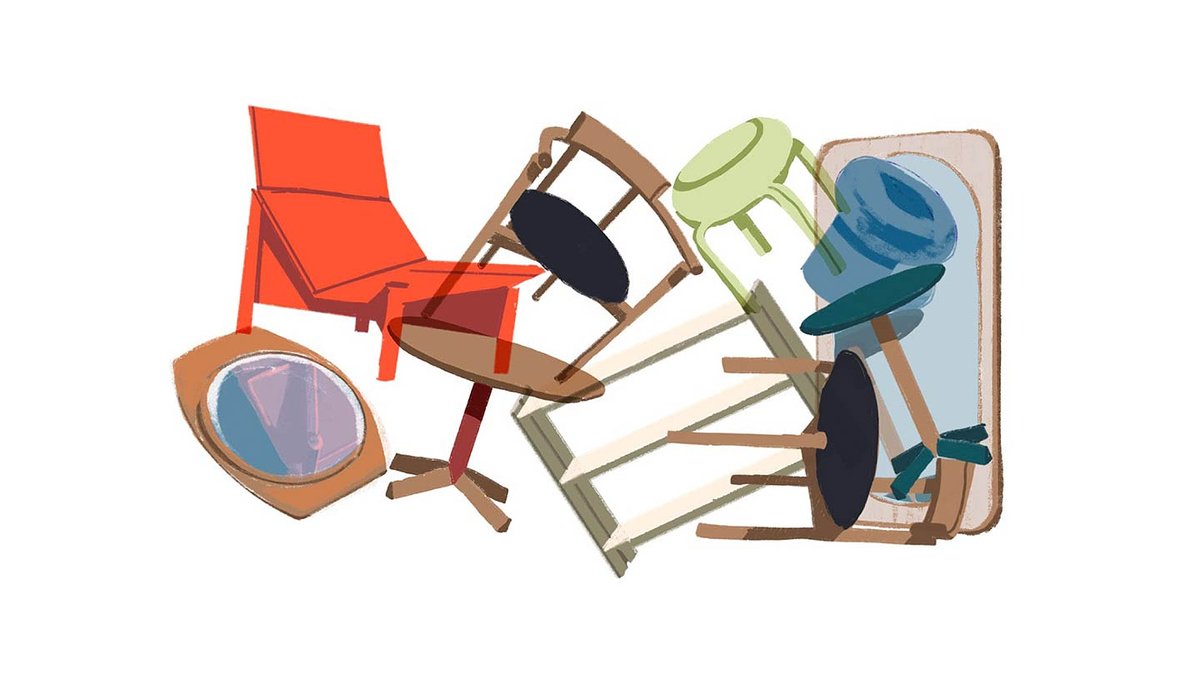
A furniture brand with deep Canadian roots faces a challenge that does not exist in France, Italy, or Scandinavia: its government lacks programs to help promote it internationally.
Canadian brand Ourse creates and manufactures furniture in Canada using local materials such as wood and steel. Its designs feature craftsmanship from studios across the country, including Montreal’s Thom Fougere and Winnipeg’s Nicole Marion. The brand’s first collection debuted at IDS Toronto in January 2024, and its early success has depended on word-of-mouth recognition at trade shows.
For a company still scaling up, the exposure would be invaluable. Scandinavia has long welcomed Canadian design; over a decade ago, designers like Tom Chung and MSDS Studio exhibited there and secured commissions from brands such as Muuto and Normann Copenhagen. However, the opportunity comes with a challenge: to appear at both IDS Toronto (late January) and Stockholm (early February), the brand would need to produce two full booths and double its inventory, as shipping furniture from Toronto to Sweden in time for both events is impossible.
Read Also: Tokyo museum reopens after Metabolist revival
Government support often resolves such issues. At Milan Design Week, a French business development committee organized Le Design Défilé, featuring 28 brands. During NYCxDesign, the Scandinavian Design Embassy hosts exhibitions highlighting Nordic talent. Poland’s Ministry of Culture even invited international journalists in 2018 to promote its furniture industry, the world’s fourth-largest by output. Canada lacks an equivalent program.
Ourse’s co-founders, Jason Henderson and Jake Oliveira, sought assistance from various grants, including those from the Canada Council for the Arts, CanExport SMEs, Creative Export Canada, and Ontario Creates. Each rejection cited different reasons: too corporate, not corporate enough, or ineligible because the exhibition was not framed as purely artistic.
The gap is evident. While Canada funds media productions—allocating $600 million to CanCon media in its latest budget—furniture design falls into bureaucratic confusion. Oliveira highlights the paradox: “We’re essentially a furniture editor, but we’re immediately disqualified.” Many people in various creative industries will be all too familiar with the often vexing eligibility rules that accompany a grant application.
Read Also: Chicago’s Obama Center redefines presidential libraries with community-focused design
Other nations treat design as both culture and commerce. France, Italy, and Scandinavia do not just exhibit furniture; they position it as a reflection of national identity. Canada recognizes cultural exports as vital to sovereignty, yet furniture, a sector where Canada excels, remains overlooked.
For Ourse, the lack of support is more than a financial hurdle; it is a missed opportunity. Without assistance, scaling internationally depends on whether the company can afford to split resources between continents. At IDS Toronto, visitors often express surprise: “The biggest signifier we had that the launch last January at IDS went well was that, multiple times, people visited the booth and said, ‘I’m so sorry, I can’t believe I hadn’t heard of you guys before.’” Oliveira notes that this reaction proves the creative direction resonates.
Canada’s last major government-sponsored furniture display at an international fair was Ontario Wood’s ICFF exhibition in 2016. Early discussions also suggest a potential Canada Pavilion for Design at Milan Design Week, spearheaded by Montreal’s Pestacle Studio. If these initiatives materialize, they could address the gap between Canada’s commercial and artistic sectors.
Related Stories
 Contractor Vetting Desk
Canada’s furniture brands struggle for global support
 Contractor Vetting Desk
Tokyo museum reopens after Metabolist revival
 Contractor Vetting Desk
Chicago’s Obama Center redefines presidential libraries with community-focused design
 Contractor Vetting Desk