Architect Reflects on Decade of Santiago Bahá’í Temple
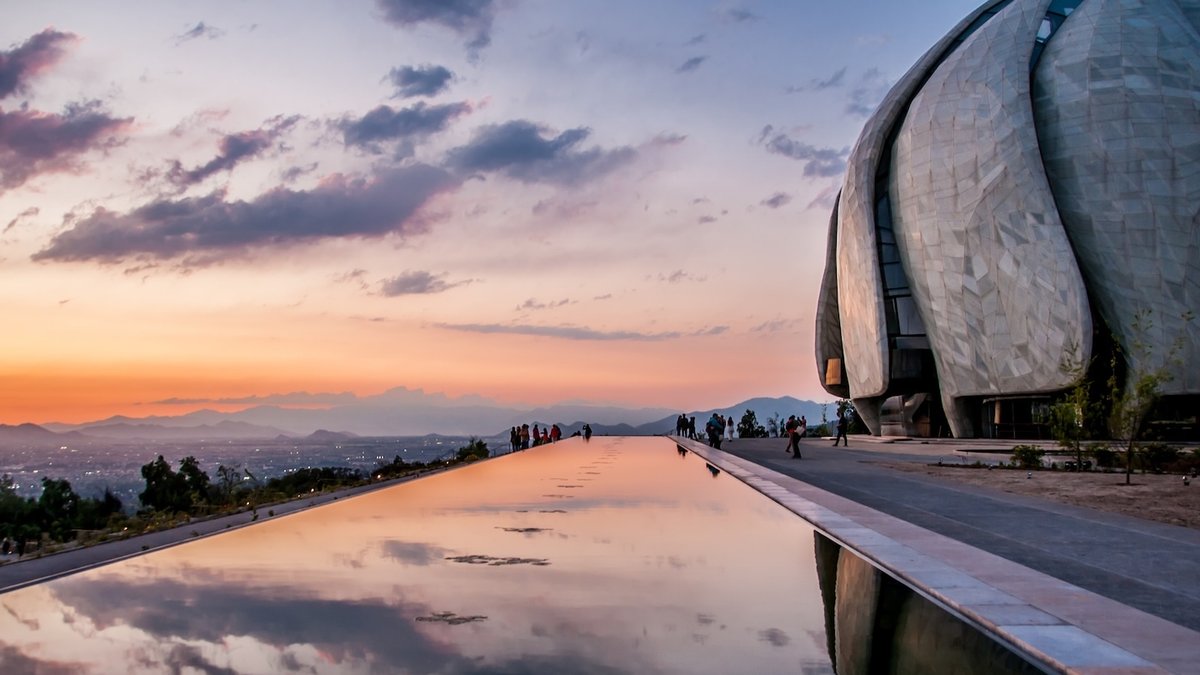
The Bahá’í Temple of South America, designed by Canadian architect Siamak Hariri, has become an integral part of the Santiago community. As the temple approaches its 10th anniversary, Hariri reflects on the project, saying, “I thought this might become a tourist thing, but it’s so much more than that.”
Hariri’s design was selected from 185 entries in an international competition, and the temple’s nine twisting wings, clad in translucent cast glass and Portuguese marble, have won numerous awards, including the Royal Architectural Institute of Canada’s International Prize. The building’s metal exoskeleton supports nine wings, each comprising thousands of individually engineered steel components, which torque toward the central oculus, giving the space a palpable sense of upward motion.
The temple is part of a global network of Bahá’í temples commissioned by the Universal House of Justice, the faith’s international governing body. Bahá’í, a young faith founded in 1863, teaches the unity of humanity and the essential worth of all religions. Hariri, a Bahá’í himself, says, “In a way, what we are doing is like making the first churches in the early days of Christianity.”
The Design Process
Hariri’s design process was unique, as he had to balance the functional needs of a temple with the aesthetic goals of creating a beautiful and meaningful space. He envisioned the temple as a crystal set against the mountains, using glass and marble to imbue the building with “a little kiss of light.”
Read Also: Riyadh gets new signature towers design
The building rests on elastomeric seismic isolators designed to absorb the force of Chile’s frequent earthquakes. Hariri recalls that the design process “taught us a lot about how to fall backward into a design process, rather than to do a design that comes straight from the head.” He sees the temple as a place where people can reconnect with their spiritual nature and the transcendent.
Fog-Shrouded Morning and Architectural Context
On an unusually rainy October morning, low clouds cling to the Andes foothills, half swallowing the Bahá’í Temple of South America in fog. The mist obscures jagged peaks on Santiago’s eastern fringe while lumpy hills and scattered skyscrapers peek through the pall. For Siamak Hariri, the Canadian architect who designed the temple, the scene feels like a mercurial homecoming. He says the weather offers a rare moment to reflect on a seminal project now approaching its tenth anniversary.
“Architecture is putting form to aspiration,” Hariri tells the interviewer while they walk from the jacaranda-lined reception toward the temple grounds. He adds that the project carried a very high aspiration, shaping every design decision from the pathway to the main hall. The pathway, he explains, was intended as an intermediary zone where visitors transition from urban life into a more spiritual space. This intent aligns with Hariri’s long-standing focus on light, material, and the emotional life of space across his Canadian projects.
Rising 30 meters, the temple dominates much of Santiago’s skyline and remains visible from numerous city districts. Inside, patinaed bronze fixtures and warm walnut floors soften the hushed atmosphere, complementing the translucent glass envelope. Ground-level windows frame Juan Grimm’s semi-feral gardens, which showcase native drought-resistant plants, wave-shaped ponds, and paths that feather toward the Andes. These garden elements reinforce the temple’s dialogue with its surrounding mountains, creating a seamless transition between built and natural environments.
Impact on the Community
The temple has become a beloved part of the Santiago community, with many visitors reporting a profound emotional response to the space. For Bahá’ís, this is a place to reconnect with their spiritual nature and the transcendent.
Read Also: Kingston co-living scheme opens with BREEAM Outstanding rating
Hariri is surprised by the temple’s warm reception, saying, “I wanted this to become one of the city’s living rooms, but nobody imagined we’d have three million visitors.” The temple now ranks among TripAdvisor’s top 20 things to do in Santiago, with visitors from around the world.
As Hariri reflects on his return to Chile one decade later, he seems to see himself as a steward of the temple. He recounts the fable of the old man and the fig tree, saying, “You know, I thought this might become a tourist thing, but it’s so much more than that.” Now, it feels like it’s the people’s temple.
The temple’s success can be attributed to its ability to evoke an emotional response in visitors, which Hariri attributes to the combined effect of environment, light, proportion, detail, craft, and texture on the soul. As he walks through the temple grounds, he is stopped by tour groups visiting from Australia and Brazil, posing for photos and conversing with them.
Later, Hariri notes that the temple’s design has influenced his newer works, such as the Tom Patterson Theatre in Stratford, Ontario, where he has applied a keener eye for detail and a tactile approach to materials. The temple’s impact on the community is evident, with its grounds hosting various community activities, including yoga, nature walks, reading breaks, art classes, and community gatherings.
Related Stories
 Contractor Vetting Desk
Architect Reflects on Decade of Santiago Bahá’í Temple
 Contractor Vetting Desk
Riyadh gets new signature towers design
 Contractor Vetting Desk
Toronto school repurposes old rink into lively student hub
 Contractor Vetting Desk