Bassike’s Byron Bay store redefines retail with modular
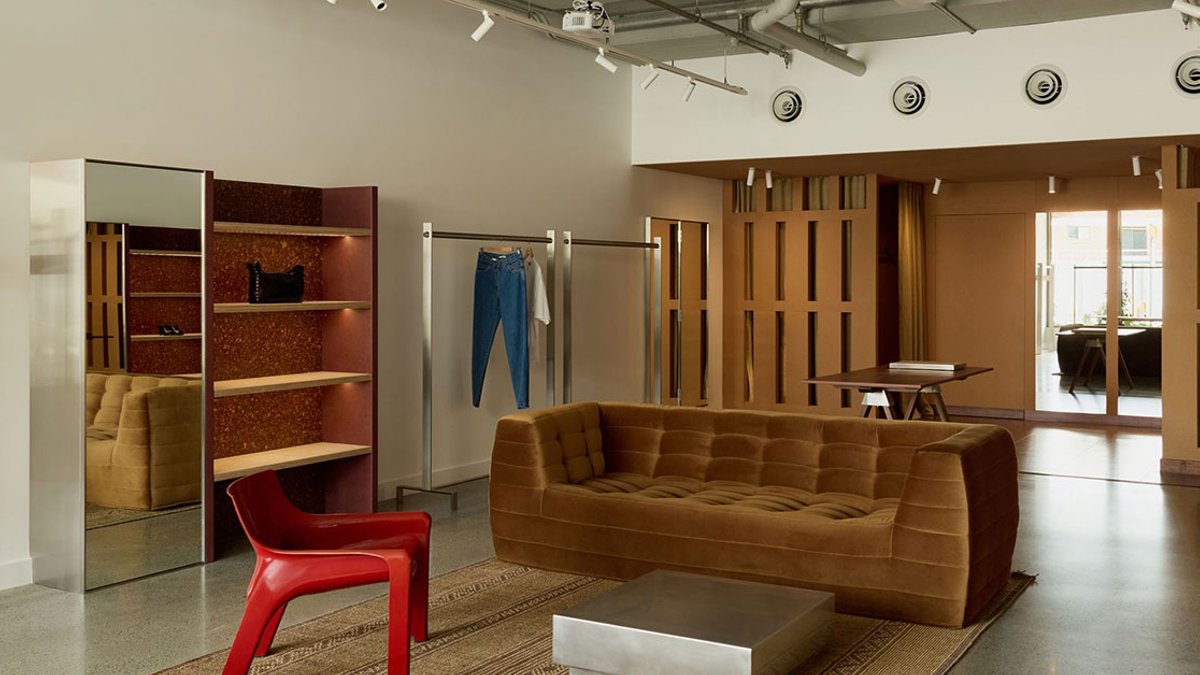
Akin Atelier has spent over a decade shaping Bassike’s retail design principles, and its newest project, a store in Byron Bay, builds on that foundation rather than breaking from it. The studio rejected the common retail trend of gutting spaces every five years, opting instead to retain the existing concrete floors and exposed ceiling services. This choice cut down on construction waste before any new materials were introduced.
The foundation of the design rests on a modular framework. Kelvin Ho, the founder of Akin Atelier, called it a “kit of parts”, a collection of interchangeable shapes, objects, and materials that can be adjusted for different store locations. This system supports Bassike’s commitment to sustainability by allowing components to be rearranged instead of discarded when stores are updated. In an industry accustomed to disposable interiors, this method provides a functional alternative.
The material selections prioritize warmth and a lived-in feel. Deep reds, chocolate hues, cork, and woven textiles take center stage, while the furniture marries Australian craftsmanship with globally sourced vintage pieces. Among the selections are a sofa from Byron Bay’s Tigmi Trading, tables designed by Henry Wilson, cork stools by Jasper Morrison, and a custom rug from Beni Rugs. These elements preserve Bassike’s minimalist aesthetic while softening its lines.
One of the more practical yet impactful details involves custom recycled plastic panels supplied by Defy, a Sydney-based manufacturer that uses landfill-diverted post-consumer plastic. The cork used throughout the project is harvested without cutting down trees, offering both durability and carbon absorption benefits. Local firms Urban Spaces Building Co. and Na Mathie Steel Fabrication handled the construction work, further supporting regional trade expertise.
Deborah Sams, the founder of Bassike, highlighted how the Byron Bay location aligns with the brand’s history, rooted in nearby Avalon. The modular design’s adaptability implies it could support future Bassike expansions while keeping its distinctive character intact.
Beyond the store’s physical features, the project reflects a broader shift in retail design. The Byron Bay location serves as a test case for this approach, with potential applications across the brand’s growing portfolio.


