Toronto Artist Merges Sikh Heritage with Futuristic Sculptures
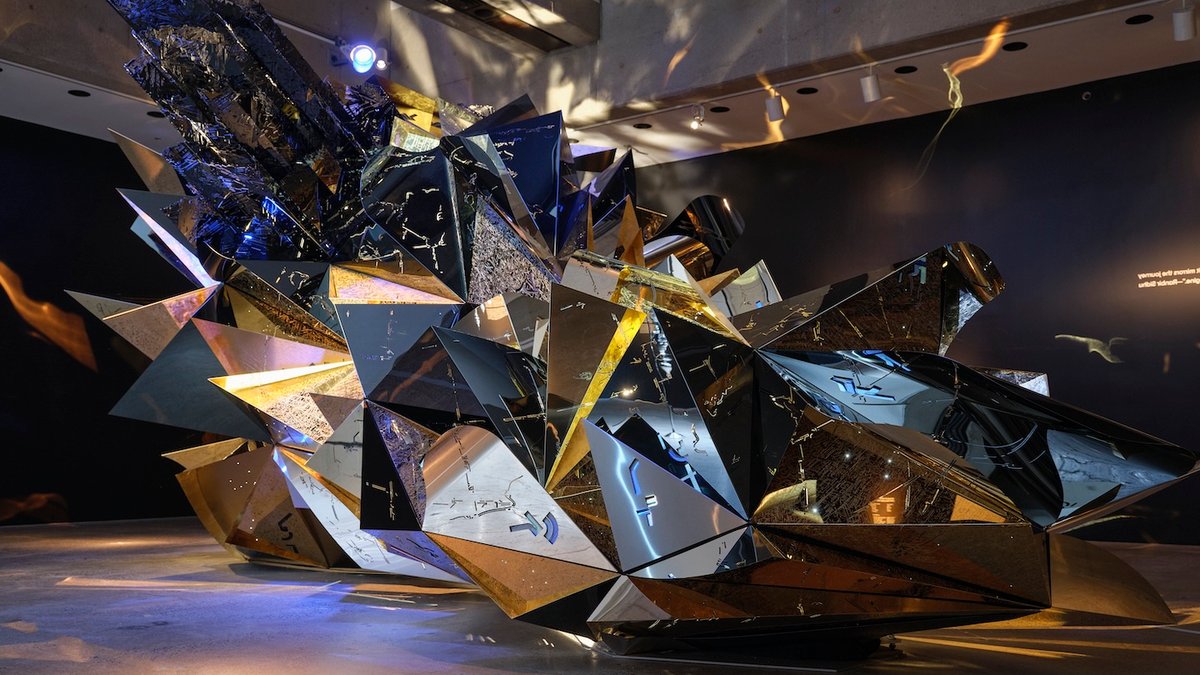
Toronto artist Ranbir Sidhu blends ancient Sikh history with futuristic themes in his large-scale stainless steel sculptures. His work, showcased at the Art Gallery of Ontario until January 3, creates immersive worlds that merge spiritual cartography with industrial fabrication. Born in England but raised in Toronto’s northeast district, the 44-year-old artist draws from his Sikh heritage and industrial upbringing to craft pieces that evoke wonder and transcend time.
A Sculptor and Cartographer of the Cosmos
Sidhu’s first major exhibition, “No Limits”, features a 4,800-pound sculpture, “Odyssey”, and a maquette of his monumental piece, “Asteroid 3033 X1”. These works, set against dark walls, evoke alternate maps of the universe. Inspired by Guru Nanak Sahib’s sacred journeys, Sidhu superimposes spiritual paths onto his sculptures, blending tradition with innovation. “Odyssey” (2025), for instance, comprises over 100 mirror-polished, gold-plated stainless-steel spires, symbolizing a fusion of the sacred and the futuristic.
A Vessel for the Future
“Asteroid 3033 X1”, weighing over 5,000 pounds and stretching 7.5 meters wide, dominates the gallery. Its 500 metal facets are inspired by the crystalline geometry of azurite and the Widmanstätten pattern found in iron meteorites. Sidhu describes it as a “vessel” carrying Earth’s essence into the future. The sculpture features an invented script, “futureglyphs”, and reimagined drawings of Copernicus’ universe. Its creation involved a quasi-architectural process, including drafting and model-making, before being crafted by a team of assistants.
The piece is lit from within and accompanied by an original soundscape blending electronic and classical Indian music. Visitors can peer into three portals revealing a miniature fiber-optic cosmos, where Copernicus’ sketches of Earth revolving around the sun are illuminated. A nearby panel quotes Guru Nanak, emphasizing the infinite nature of the universe. When photographed, the sculpture reveals images of constellations, adding a modern layer to the gallery experience.
Sidhu’s work is deeply rooted in his Sikh faith and his upbringing in Scarborough. Born in the U.K. and raised in Toronto’s northeast district, he was influenced by his family’s steel foundry, where he developed a fascination with transforming abstract ideas into physical forms. The Scarborough Bluffs, with their dramatic cliffs and vast horizons, further shaped his interest in monumental forms and the interplay between natural and constructed environments.
Read Also: Ligne Roset Balances Heritage and New Designs
His piece “Fortress of Memory” honors the 21 Sikh soldiers who fought against a 10,000-strong force at the Battle of Saragarhi in 1897. Sidhu’s public artwork, “Scarborough Rising”, features soaring hot air balloons, symbolizing the district’s history, present, and future aspirations.
The Artist’s Journey and Influences
Sidhu’s artistic journey is deeply intertwined with his personal history and the environments that shaped him. Born in the U.K. and raised in Scarborough, he was immersed in a world of industrial manufacturing at his father’s steel foundry. This early exposure to metalwork and the transformation of raw materials into tangible objects sparked his fascination with the creative process. He often took home metal scraps to create small sculptures, developing an appreciation for the interplay between imagination and engineering.
Public Art and Community Impact
Sidhu’s art extends beyond gallery spaces, making a significant impact on public environments. His installation, “Scarborough Rising”, featuring hot air balloons, was selected as a landmark public artwork for a future town center. This piece symbolizes the district’s history, present, and future aspirations, reflecting Sidhu’s commitment to community engagement and cultural representation.
This piece not only honors their bravery but also highlights Sidhu’s ability to merge historical narratives with contemporary artistic expression. Through his public art, Sidhu creates spaces that invite reflection and connection, bridging the gap between personal heritage and shared cultural experiences.
Related Stories
 Contractor Vetting Desk
Toronto Artist Merges Sikh Heritage with Futuristic Sculptures
 Contractor Vetting Desk
Canada’s furniture brands struggle for global support
 Contractor Vetting Desk
Tokyo museum reopens after Metabolist revival
 Contractor Vetting Desk