How to Choose a Home Fire Extinguisher
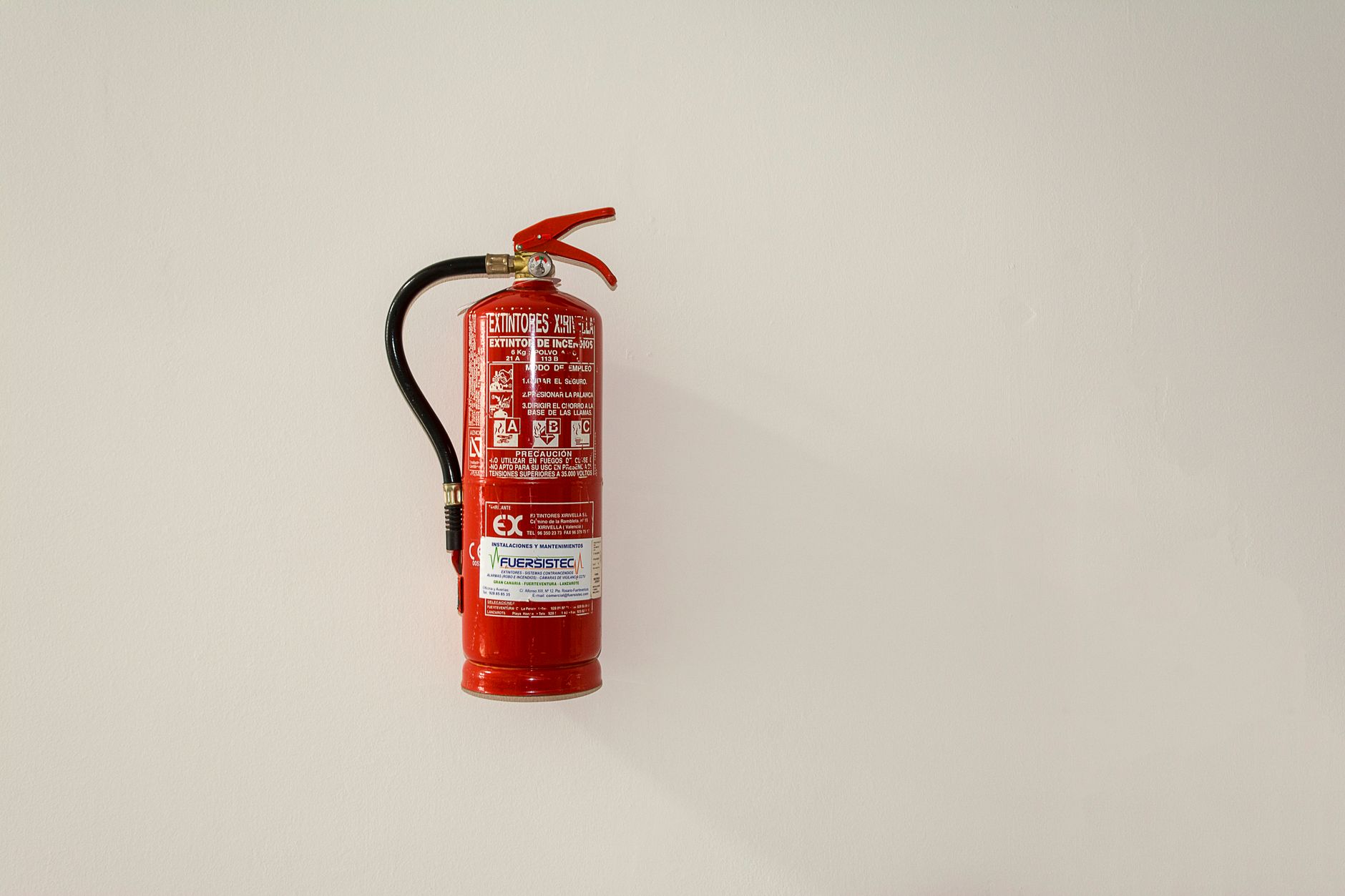
Nearly every home in the country now has at least one smoke detector, but about a quarter of households still haven’t installed fire extinguishers.
That’s a problem.
Extinguishers help prevent thousands of house fires each year. “People often don’t want to invest a few dollars into a safety product. But a small investment can go a long way if you need it,” says home safety expert Philip Farina.
It’s not enough just to buy a couple of units.
To make them effective, you need to choose the right type, put them in good spots, and keep them maintained.
You also need to know when to use an extinguisher — and when to get out.
The basics: what a home extinguisher is and does
A home fire extinguisher is a portable, pressurized container that releases a dry powder or wet chemical. It’s designed for small, contained fires in their early stages. While single-family homes aren’t legally required to have them, insurance companies often offer discounts for installing them.
There are five classifications of fire extinguishers. For home use, safety experts generally recommend a combination ABC extinguisher, since those handle the most common ignition sources. Sizes range from 2.5 pounds to 10 pounds.
Where to put them — and where not to
The most important places are the kitchen and garage or workshop.
It’s also smart to have one on every floor, including the master bedroom and laundry room.
Related: Stripes Made Easy with Simple Painting Tips
Keep one near your grill, too.
Fire and safety expert Lo Choe recommends five-pound ABC units in general living areas, plus a separate class K extinguisher in the kitchen for grease fires. For the garage or workshop, consider upgrading to a 10-pound ABC model.
Mount extinguishers in visible, accessible spots, three-and-a-half to five feet off the ground, near room exits. In the kitchen, keep them 10 to 15 feet away from the stove.
How to use one: the PASS method
The method is known as PASS — pull, aim, squeeze, sweep.
Choe explains that PASS has been around for over 50 years and is by far the easiest way to remember how to use a fire extinguisher correctly. “Remember to stand about six to eight feet away from the fire when you begin, and slowly back away while watching for flare-ups once you think it’s out.”
If there’s any doubt the fire is completely out, call the fire department and tell them you’ve used your extinguisher. Only attempt to fight a fire if it’s small — no taller than your chest — and you have a safe exit.
If smoke is heavy or rising above half the room, evacuate immediately, shut the door, and call 911 from outside.
“Fire needs oxygen to sustain itself.
If you are caught trying to fight a fire with limited visibility, you will have less than a minute before you are disoriented and pass out,” he warns.
Maintenance and lifespan
Disposable home fire extinguishers last eight to 12 years from the manufacturing date printed on the bottom.
They should be replaced on time.
Related: Bluebird House Made from Single Cedar Board
Rechargeable models can last 12 to 15 years but need professional servicing per the manufacturer’s recommendations.
Examine your extinguishers once a month.
Check the gauge — the needle should be in the green.
Make sure the pin is in place and the seal is intact.
If the canister is dented or has corrosion deeper than the thickness of your nail, replace it.
Take it to a household hazardous waste disposal site.
“Stay away from disposable extinguishers with plastic heads,” advises Choe. “They have shorter service lives than metal-head rechargeable units.”
Equipment leasing expert Cal Singh adds: “This is why you should have annual professional servicing, and not just a visual inspection.”
“A technician empties the unit, inspects the condition of the agent and recharges it appropriately.”
How many do you need?
It depends on the size of the home, but the general rule is at least two — and more is safer.
Ideally, one on each floor, including kitchen, laundry room, master bedroom, and garage.
Related: Who cleans up the traces of blood at the crime scene after the cops and investigators leave?
Also keep one near fireplaces and outdoor grills.
“I’d go one per 1,000 square feet on larger houses, and keep travel distance to any extinguisher 40 feet or less,” he suggests.
Explosion risk and storage locations
Yes, explosions are rare but possible.
Modern extinguishers have safety valves to vent pressure, but never store them in places above 120°F.
Interior car temperatures can reach 160°F in the summer.
Corrosion also increases the risk.
“Dropping your fire extinguisher from four or more feet onto a hard surface can also breach the valve stem,” cautions Choe. “These cases are rare, but don’t let that lead you to thinking they can’t happen.”
Avoid direct sunlight, hot attics, car trunks, non-insulated garages, or any area that can exceed 120°F or drop below -40°F.
Also avoid damp basements and rust-prone environments.
“Locked up, behind furniture or stored higher than six feet are contrary to the point of owning one,” points out Choe. “Also, where you mount your fire extinguisher matters. If it can roll away when grabbed, it will.”


