Melbourne restaurant keeps 70-year-old character intact
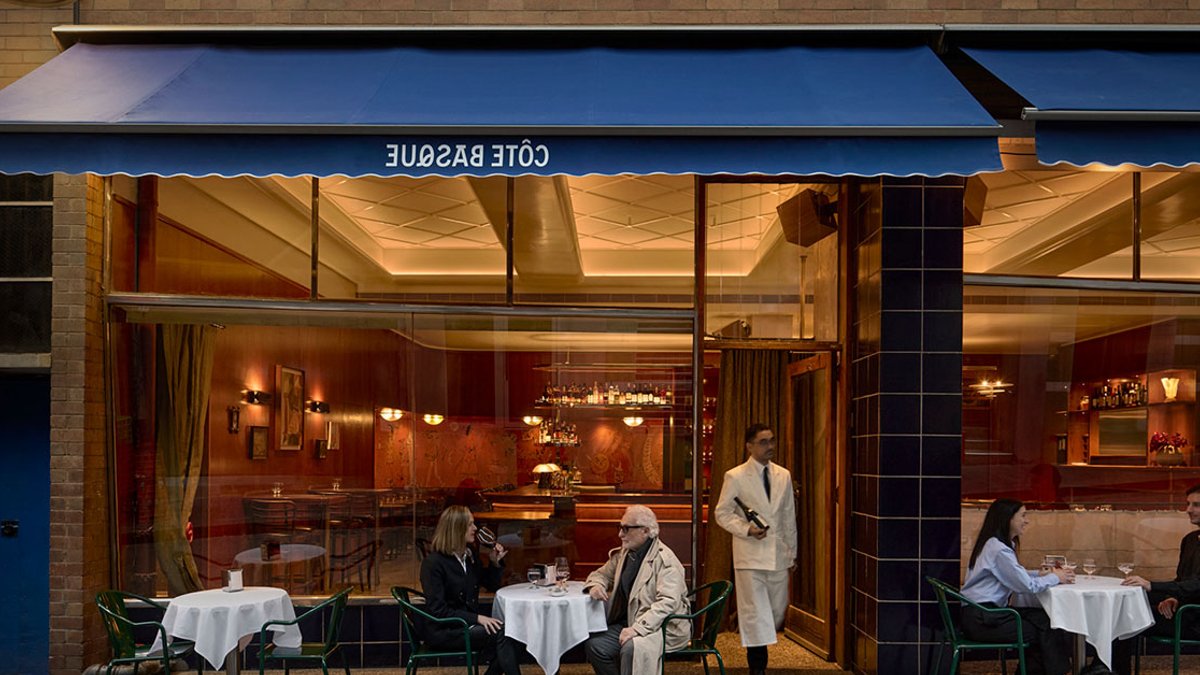
A Melbourne restaurant at 25 Crossley Street has maintained its original 1950s terrazzo floors, cherrywood-paneled walls, and slanted mid-century windows—elements most renovations would have removed. The property, which opened in 1954 as Pellegrini’s Tavola Freddo Cantina, has hosted just three businesses over seven decades, including Becco, a beloved fine-dining venue known for proposals and extended lunches. Andrew McConnell and Jo McGann have now rebranded it as Côte Basque, a European grill focused on flame and embers. The choice to retain the space’s historical character was intentional. The tiered dining area, a hallmark of Becco, remains unchanged.
McConnell called it a space with a “beautiful soul,” capturing the site’s 70-year tradition of hospitality. While many restaurants would reshape such layouts, Côte Basque’s design preserves them, framing the area as a performance space rather than a rigid floor plan. Inside, a leather-wrapped bar serves as the focal point at the entrance, while a 12-meter mural by artist Magnus Reid, who previously worked as a chef in London, covers the wall behind it. The central wood-fired grill organizes the room’s movement, with the upper tier sectioned off as the Galleon Room.
Read Also: Jaipur Rugs Opens Mumbai Store Blending Heritage, Modern Design
Outside, 24 seats extend onto the laneway, reflecting Melbourne’s laneway dining trend. This restraint in design mirrors McConnell and McGann’s broader philosophy. It marks their fifth collaboration with Acme, following projects like Gimlet and Apollo Inn. Their skill in blending preservation with contemporary function is evident here: they keep what defines the space while introducing only what enhances it. For visitors, the experience becomes one where history isn’t just acknowledged but immersed in. The terrazzo floors, woodwork, and angled windows each hold the weight of decades of meals, conversations, and shared moments.
In a city where heritage spaces often prioritize bold redesigns, Côte Basque takes the opposite approach, allowing the building to tell its own story. The outcome is a restaurant that feels like an evolution rather than a reinvention. The grill’s warmth and the quiet hum of the laneway seating create a natural rhythm that harmonizes with the space’s past, rather than clashing with it. Regulars will notice only subtle shifts, while newcomers will immediately sense the layers of history embedded in every detail.
Related Stories
 Contractor Vetting Desk
Gardening advent calendars blend seeds, tools and treats
Different Tools for Different Weeding Tasks
 Contractor Vetting Desk
Goldfinches flock to gardens with simple autumn prep
 Contractor Vetting Desk